Choose a time and place before the wedding
Right after the ceremony is often a useful time for family photographs because the people you need are already together. The important part is letting them know to stay before they head to the reception or wander off to catch up with friends.
Agree on a nearby meeting point with us and your planner or venue coordinator. Ask your officiant to remind anyone on the photo list where to gather. If you’re planning a receiving line, include it in the timeline so congratulations and family photographs both have room.
Choose a spot that people can reach comfortably. Shade, somewhere to sit nearby and a short walk can matter more than an elaborate backdrop, especially for older relatives or guests with mobility needs.
Write down the actual names
“Couple with parents” tells us the photograph you want. “Couple with Louise, Marc, Susan and David” helps us find the people who belong in it.
Make one list of the combinations you really want. Put a star beside the essential photographs, then look for duplicates. You don’t need every possible combination to have a meaningful collection of family pictures.
Tell us privately about any family circumstances we should know: separated parents, someone who has died, relationships that need care, or people who shouldn’t be asked to stand together. We don’t need the whole story. Just enough information to avoid an uncomfortable moment.
Choose someone who knows the faces
We can arrange a group and make the photograph, but we may not know which of the guests is your cousin. Choose a helper from each side of the family who knows the people on the list and is comfortable gathering them.
Give your helpers the same final list we have. While we photograph one group, they can locate the people needed for the next. This works much better than sending you off to find someone in your wedding clothes.
A starting list you can make your own
Use either partner’s name in place of “Partner A” and “Partner B,” and replace the relationship labels with names. Include the people who are family to you. These are options, not a checklist you have to complete.
- Couple with grandparents or other relatives who would benefit from finishing first
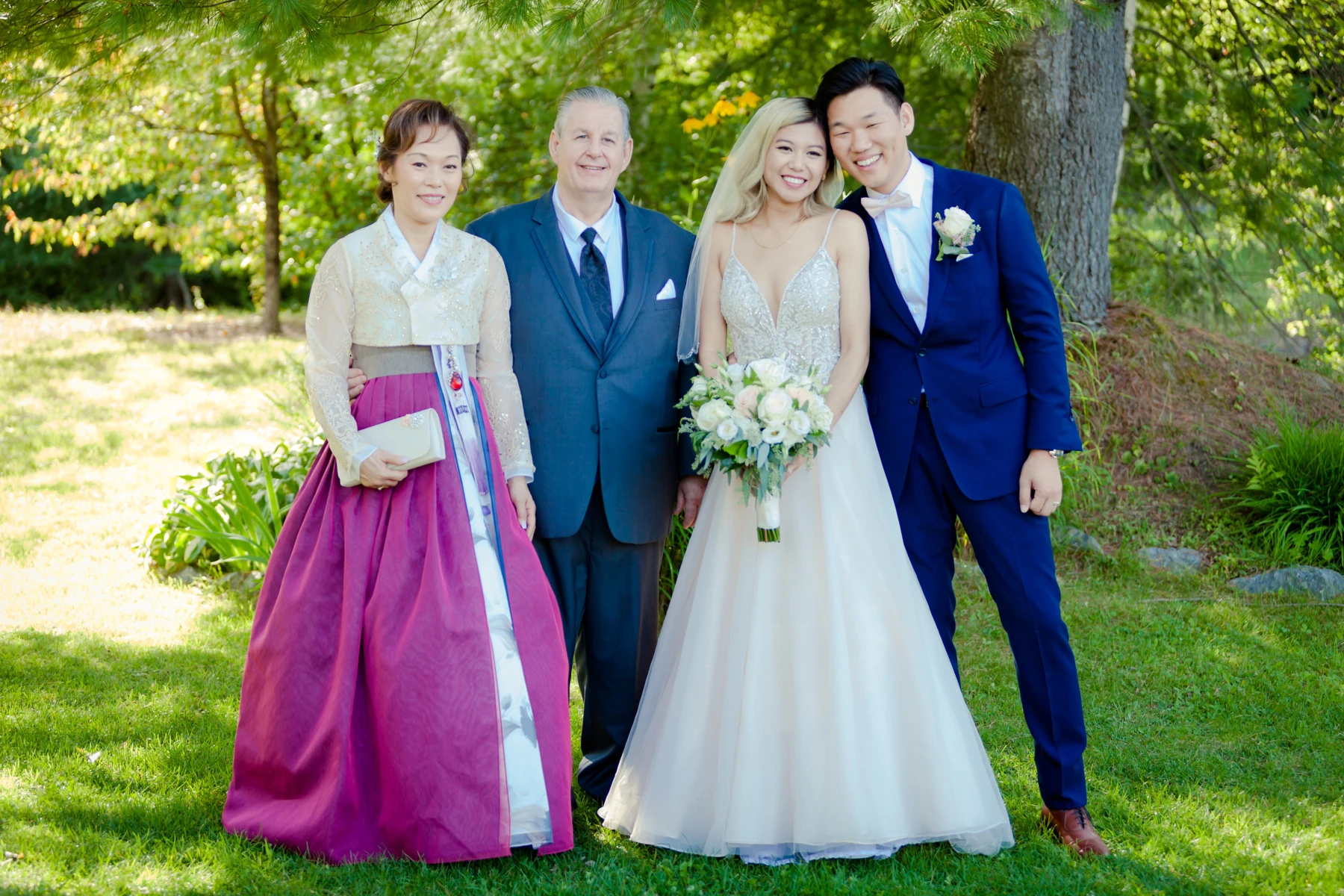
- Couple with Partner A’s immediate family
- Couple with Partner A’s parents or parent figures
- Partner A with each parent, and with siblings
- Couple with Partner B’s immediate family
- Couple with Partner B’s parents or parent figures
- Partner B with each parent, and with siblings
- Couple with both families together, if wanted
- Couple with any essential extended-family groups
- Couple with special friends, godparents or mentors
For each grouping, write the names, who will gather them and anything we need to accommodate. Photograph guests who need a seat or a break early, then release people as their photographs are finished.
Friend groups can sometimes happen later at the reception. If a particular group is important, put it on the list rather than hoping everyone happens to be together.
Allow time for the people, not just the shutter
Your existing list is the best guide to how long this will take. As a starting point, allow around 15–20 minutes for a small immediate-family list, or 30–45 minutes when extended family and friends are included. Large groups, extra combinations or movement between locations can take longer.
We’ll review the list with you and adjust the order and timing. A photograph itself may take only a moment; getting everyone into the right place is what uses the time.
A manageable list helps you get the photographs you care about and then get back to the people you invited. That’s the goal.